Choose a bauta for the classic Venetian silhouette, a volto for a full-face disguise or a colombina for an easy-to-wear eye mask; ask who made it and try it on before buying.
A Venetian mask can be a costume, a piece of theatre or a handmade object to bring home. Papier-mâché and hand painting are part of the craft, but neither technique alone proves where an individual mask was made.
Jump to a section
Start with how you want to use it. A display mask can be beautifully detailed and uncomfortable to wear; a light eye mask can be the better companion for an afternoon outside. For dates, viewing areas and the wider celebration, see our Venice Carnival guide.
The main Venetian mask types
Names are useful starting points, not universal product specifications. Shapes and decoration vary between makers. Look at what the mask covers and how it fastens as well as the label on the shelf.
AI-generated original illustration
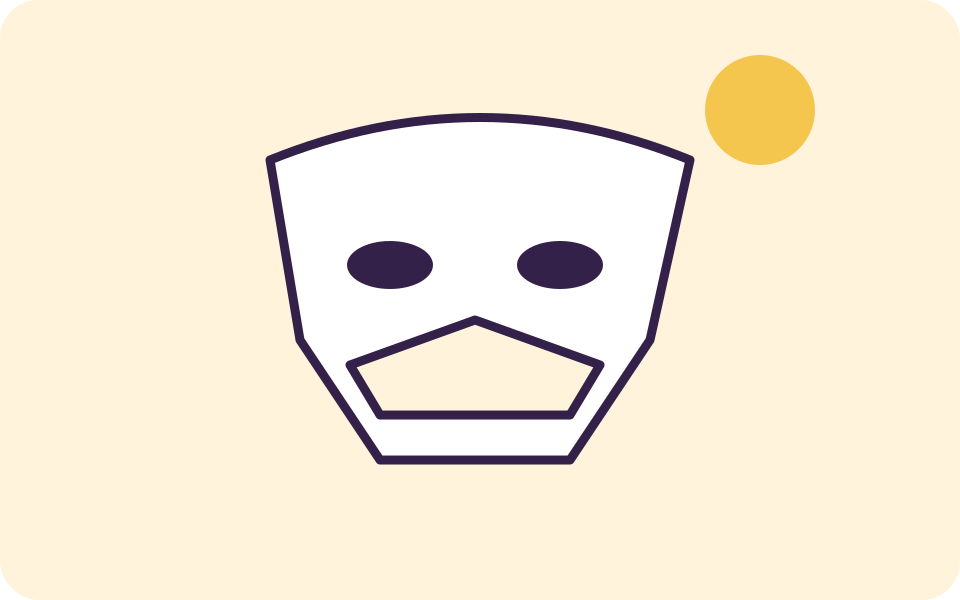
Bauta
The classic white disguise, often paired with a black tabarro cloak and tricorn. The official carnival describes its raised jaw as allowing speech and eating.
Wear it if: you want the recognisable Venetian shape. Test the fit yourself: a historical design feature does not make every modern version comfortable.
AI-generated original illustration
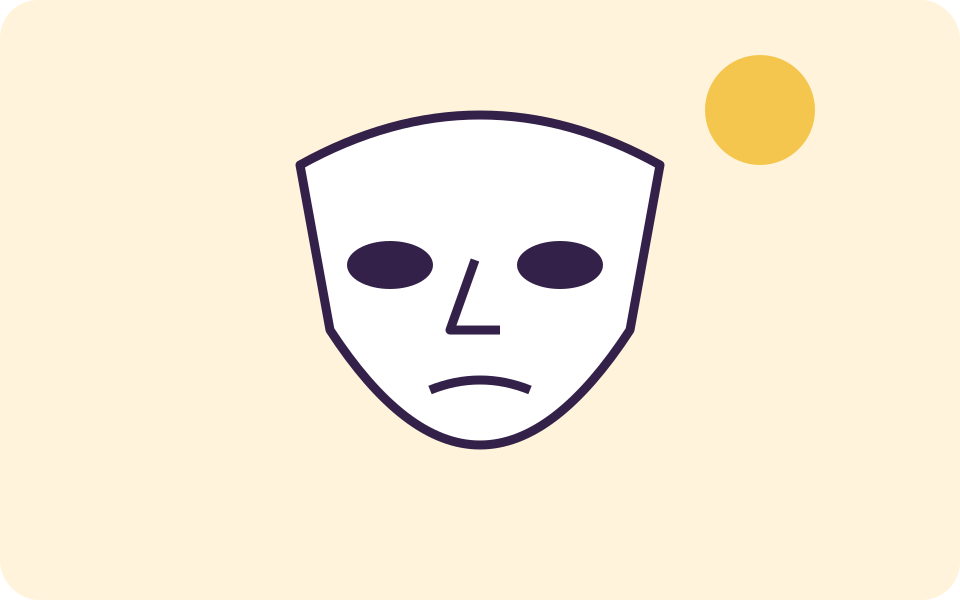
Volto, sometimes sold as larva
A face-shaped mask covering the whole face, including the chin. Shop terminology varies; ask what a maker means by larva.
Wear it if: you want a still, anonymous expression for photographs. Try talking and looking down before choosing it for long periods.
AI-generated original illustration
Moretta
The historical moretta was an oval black velvet mask, held against the face by a button between the teeth, which kept its wearer silent.
Wear it if: its history interests you. Ask whether the version on sale uses that historical fixing or a modern strap; the difference matters for comfort.
AI-generated original illustration
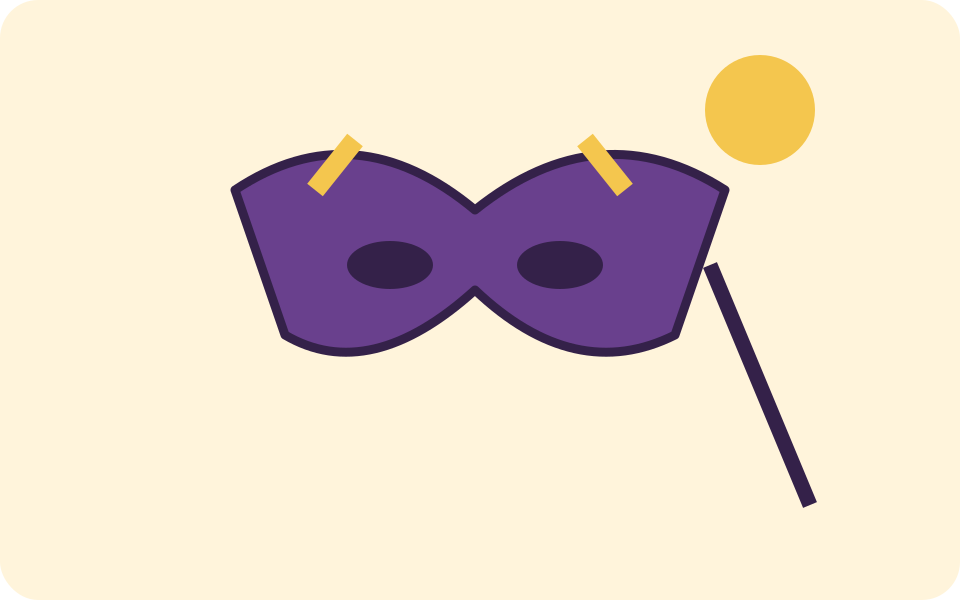
Colombina
A modern shopping category for an eye mask that leaves the mouth uncovered. You will find ribbon-fastened and handheld versions.
Wear it if: you want to chat and stop for food without removing a full-face mask. A stick occupies a hand; ribbons need a comfortable knot.
AI-generated original illustration
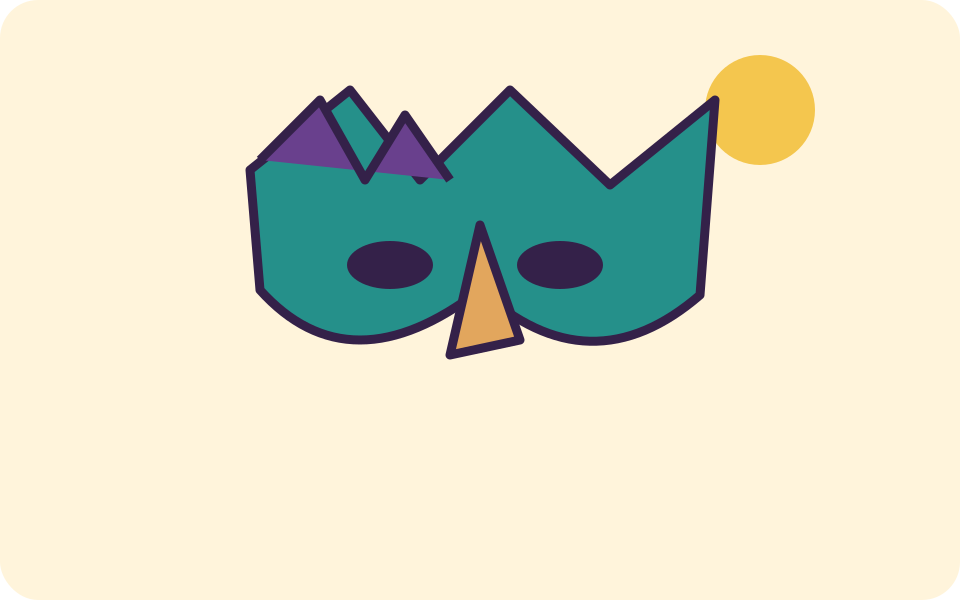
Medico della peste
The beaked plague-doctor mask draws on historical medical dress. A carnival replica is a costume object, with no protective function.
Wear it if: you like a dramatic outline. Think about the length of the beak in crowds and luggage, and remove it whenever it blocks your view.
AI-generated original illustration
Gnaga
A cat-shaped mask associated with a historical satirical costume in which men dressed as women and played with social roles.
Wear it if: you want a feline shape and an introduction to the carnival's comic traditions. Treat historical descriptions as context, not instructions for mocking people today.
AI-generated original illustration
Commedia dell’arte
These masks belong to theatrical characters. Arlecchino is a servant character; Pantalone a Venetian merchant; Pulcinella has a distinctive hooked nose.
Wear it if: you want to build a character through posture and costume. They come from Italian theatre; they are not all characters originating in Venice.
A short history of masks in Venice
Masks could conceal identity as well as create a character. The bauta and cloak covered the person beneath; theatre masks made a role recognisable. Those are different uses of the same craft, and explain why a shop can contain both plain faces and exaggerated noses.
The mask-makers, or mascareri, obtained their own regulating statute, the Mariegola, on 10 April 1436, according to Venice's civic museums. That is a milestone in the organisation of the craft, not the date on which somebody first made a Venetian mask.
The municipality dates the revival of public carnival celebrations to 1979. Its history also records that private and smaller celebrations continued during the quieter intervening period. Today's carnival therefore combines inherited forms with modern designs and contemporary performance.
Handmade mask or mass-produced souvenir?
Ask three direct questions: what is it made from, where was it made, and who decorated it? A clear answer is more useful than a vague “Venetian style” label. If local manufacture matters to you, ask whether that means the whole object or only its final decoration.
Look inside as well as outside. Examine the edges around the eyes, the nose bridge, the attachment points and any lining. Try it with your glasses and intended hairstyle. Check that ribbons can be adjusted without pulling the mask into your eyes.
Weight, a workshop signature and an uneven handmade finish can prompt useful questions, but none is proof on its own. A heavy mask is not automatically poor; a light mask is not automatically handmade. Decoration can hide the base, so ask to see an undecorated example when one is available.
We give no universal price range: material, decoration, size and the maker's time all affect the price. Ask for the current price of the actual object, whether packaging is included and how a fragile purchase will travel. Keep the receipt and the maker's details.
Where to buy a mask in Venice
Choose a workshop where somebody can explain the process, then give yourself time to look. Watching work in progress can help you understand what you are paying for. A shop display is not proof that every object on sale was made in the room behind it.
Ca’ Macana is named in Venezia Unica's local-handicrafts listings and featured by the official carnival. The carnival's archived 2026 programme also documents its mask-decorating workshops. That establishes an official-source example to investigate, not a claim that we inspected its products or that a particular 2027 session is available.
For a class, ask whether you will make a base or decorate a prepared mask, what materials are included, and how you take the result home. These are different experiences. Ask about the teaching language and suitability for children before reserving.
Buying in the UK or online
Read the material and size description before judging the photograph. “Venetian” may describe a design rather than its place of manufacture. Ask for the actual width, height and depth, and whether the item is intended for wearing or wall display.
Choose ribbons for hands-free wear, or a stick if you prefer holding it briefly for pictures. A handheld mask also means managing it alongside a bag, phone or coat. For glasses, ask about clearance and favour a seller who can explain the fit.
Request photographs of the back, the fixing and the edges if the listing only shows the decorated front. Read the seller's current delivery and returns terms, especially for personalised work. Allow time to try the mask at home before travelling.
Plan the journey home before choosing a large or elaborate piece. Ask for a rigid box that supports the mask without pressing on its nose or decoration. Keep loose ribbons separate from delicate feathers and raised details. Try the packed box in your bag while you can still change the packaging; do not rely on squeezing it into a small gap later.
If you are buying for somebody else, favour a clear description of the intended use over a guess about their face size. A display piece and a wearable gift are different purchases. Keep the maker's care instructions with the mask, and ask how to clean the particular material without damaging its finish. We do not suggest a single cleaning method for every painted or fabric-covered surface.
Wearing a mask at the carnival
Start with a short walk in it. Look down, turn your head and practise taking it off without dropping it. Remove anything that restricts your sight on bridges, steps and boat boarding points. Carry a protective bag so taking it off is easy.
A mask does not replace practical winter clothing. Fit it around a comfortable outfit and shoes with grip; our costume guide helps you choose the rest. Ask before photographing a costumed person and keep paths clear while you pose.
Private balls set their own dress codes. Read the individual event's requirements before buying a costume: a mask alone may not meet them. Use our Venice guide to plan the celebration around your chosen event and accommodation.
The bauta is a strong starting point for the classic Venetian silhouette; the moretta and gnaga also have documented local histories. There is no single compulsory mask for visitors.
Can women wear a bauta?
Choose the mask that fits your face and costume. We recommend it without a gender restriction; the historical discussion of disguise is context, not a modern visitor dress rule.
What does the plague-doctor mask mean?
Its long beak refers to historical medical dress. Today's carnival versions are theatrical or decorative objects, not medical equipment.
How much does a real handmade mask cost?
There is no sourced universal price here. Ask the maker for a current quotation for the material, decoration and size you want. Price alone does not prove authenticity.
Can I wear a mask on the vaporetto?
This guide has not established blanket operator permission for decorative masks. Take it off for safe boarding, identification or a staff request, and consult ACTV's current conditions for your journey.
Do I need a mask to visit the carnival?
Our suggestion is to start with the atmosphere and wear one if you enjoy it. Individual ticketed events can have their own dress rules; consult the event you plan to attend.